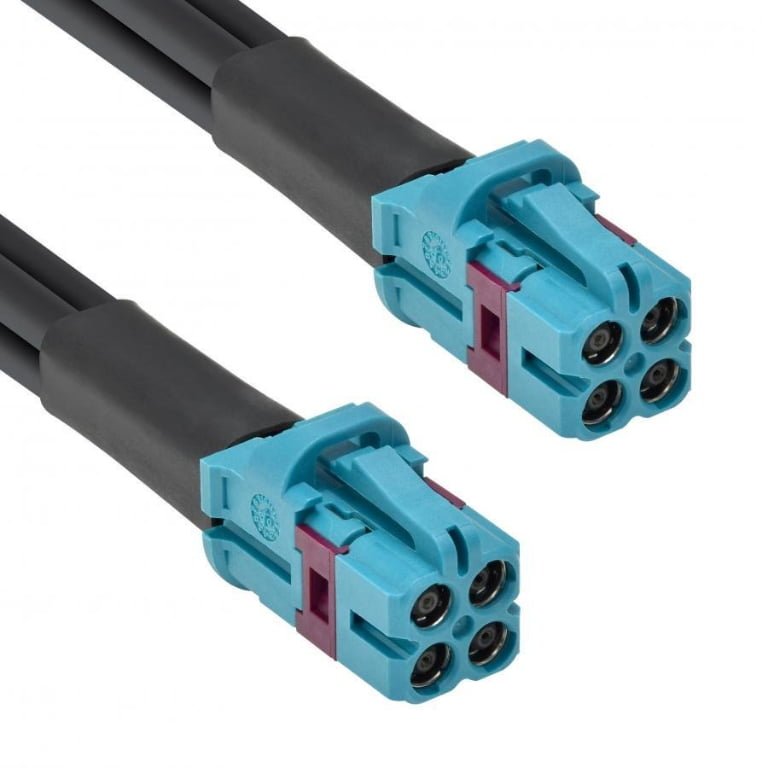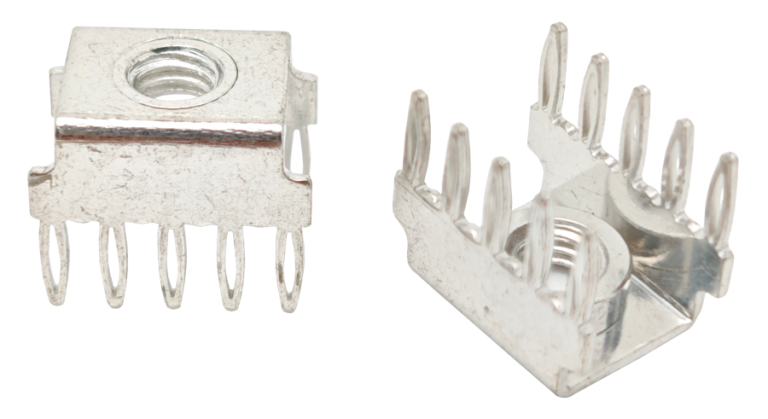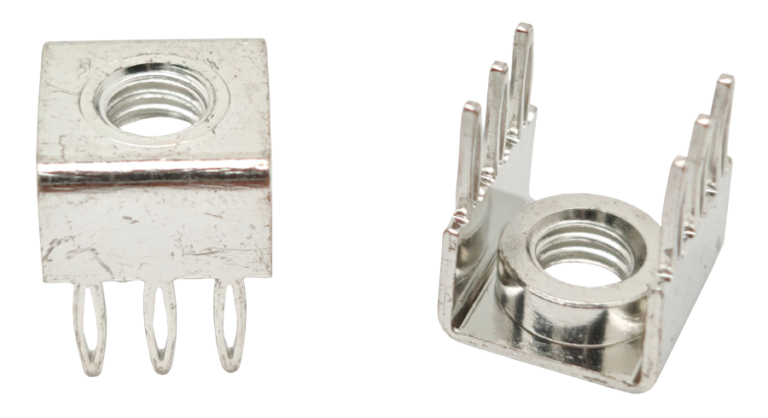
In an era where a single electrical fault can idle a production line, ground a commercial aircraft, or halt a life-saving medical procedure, the humble wiring harness has never been more critical. Often overlooked as a commodity, these intricate networks of cables, connectors, and protective sheathing are the nervous system of modern industry. Choosing the right manufacturer isn’t just a procurement checkbox—it’s a strategic decision that directly impacts product reliability, safety, and total cost of ownership. This expert ranking dissects the global leaders shaping the wire harness landscape in 2025, equipping sourcing professionals with the insights needed to de-risk supply chains and secure manufacturing excellence.

Why Wire Harness Quality Defines Product Reliability
Mission-critical sectors operate with zero margin for error. In an automotive assembly line, a single defective harness can trigger recalls affecting millions of vehicles. Similarly, an aerospace harness failure at 35,000 feet is unthinkable. The interdependence between harness integrity and system-level performance means that even minor defects—a poorly crimped terminal, substandard insulation, or inadequate strain relief—can cascade into catastrophic downtime. For medical devices, where patient safety is paramount, harnesses must withstand repeated sterilization cycles and demanding flex requirements without signal degradation. These high stakes elevate harness manufacturing from a simple assembly task to a discipline where materials science, precision engineering, and rigorous testing converge.
The real cost of inferior harnesses often remains hidden until it’s too late. Beyond the obvious expense of field failures and warranty claims, sourcing teams must account for the ripple effects: delayed product launches, regulatory non-compliance, and irreparable brand damage. Global supply chains amplify these risks, as quality inconsistencies in a low-cost country can easily propagate upstream. Consequently, world-class manufacturers invest heavily in automation, traceability, and in-house testing labs to guarantee that every harness leaving the factory meets exacting standards. This deep interconnection between component quality and system reliability is the foundation upon which the following ranking is built.
Understanding the Global Wire Harness Market
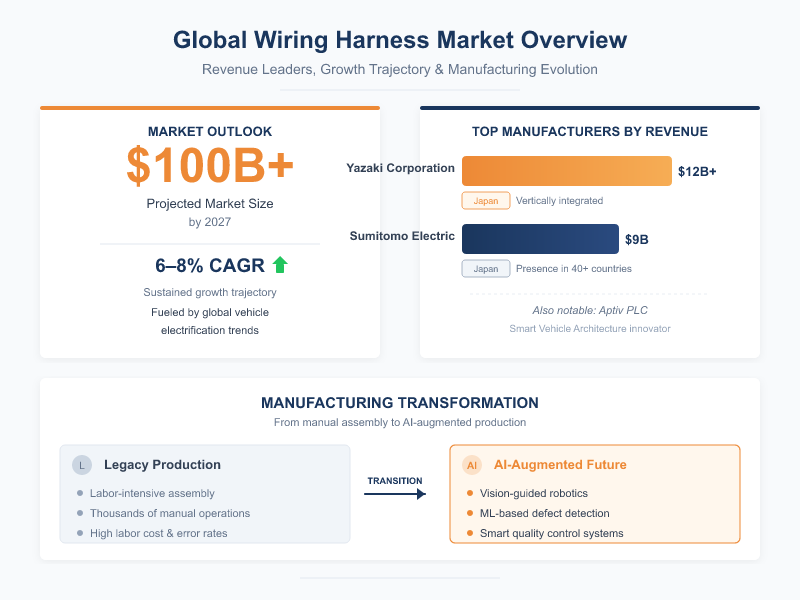
The global wiring harness market is projected to exceed $100 billion by 2027, riding a compound annual growth rate (CAGR) of around 6–8 percent. This robust trajectory is fueled by the electrification of vehicle fleets, the rapid deployment of Industry 4.0 infrastructure, and sustained defense modernization programs worldwide. Electric vehicles (EVs) alone represent a transformative force: a typical battery electric vehicle contains nearly twice the harness content of its internal combustion engine counterpart, particularly in high-voltage architectures. Meanwhile, smart factories demand modular, data-intensive cable assemblies that support sensors, actuators, and edge computing nodes.
Geographically, the manufacturing footprint continues to shift. While China remains a heavyweight due to its expansive electronics ecosystem, Southeast Asia, India, and Eastern Europe are rapidly gaining ground as cost-competitive alternatives with improving technical capabilities. Trade dynamics, including nearshoring trends and tariff uncertainties, are prompting Tier 1 suppliers to diversify production across multiple continents. Simultaneously, raw material volatility—especially copper price fluctuations—pressures margins and compels manufacturers to explore weight-reducing aluminum alloys and advanced composites. Regulatory frameworks such as IPC/WHMA-A-620 for cable and wire harness assemblies, along with UL and ISO certifications, have become non-negotiable baseline requirements for suppliers seeking global market access.
Criteria for Ranking the Top Wire Harness Manufacturers
To deliver a ranking that goes beyond mere revenue tables, we applied a multi-dimensional evaluation framework grounded in publicly available financial data, verified industry certifications, and operational track records. The following weighted criteria ensure that each manufacturer’s ranking reflects not just scale but sustained competitiveness in an increasingly demanding market.
- Revenue and Production Capacity: Annual wire harness segment revenue (2024 fiscal estimates) and global factory footprint, indicating economies of scale and ability to handle high-volume programs.
- Certifications and Technological Edge: Adherence to international standards (IATF 16949, ISO 9001, AS9100) and investment in proprietary technologies such as automated crimping, inline testing, and digital traceability systems.
- Customer Portfolio and Industry Diversification: Depth of relationships with OEM giants across automotive, aerospace, industrial, and medical sectors, demonstrating resilience against sector-specific downturns.
- Supply Chain Resilience and Sustainability: Vertical integration, regional dual sourcing, and measurable ESG commitments, including copper recycling rates and carbon-neutral manufacturing initiatives.
This transparent methodology empowers readers to assess the list not as a generic popularity contest, but as a strategic sourcing tool aligned with their specific operational priorities.
Leading Global Wiring Harness Manufacturers (1–5)
Yazaki Corporation — With estimated revenues exceeding $12 billion, Yazaki remains the undisputed giant. Headquartered in Japan, its vertically integrated model—from wire drawing to final assembly—enables unmatched quality control and cost efficiency. The company’s dominance in the automotive sector is nearly total, supplying virtually every major global OEM. Yazaki’s R&D emphasis on lightweight materials and high-voltage systems positions it as a cornerstone supplier for next-generation EVs. Its footprint spans over 40 countries, ensuring just-in-time delivery to production hubs worldwide.
Sumitomo Electric Industries — Another Japanese powerhouse, Sumitomo Electric generates approximately $9 billion from its wiring harness division. Its presence in more than 40 countries supports a diversified portfolio that extends from compact passenger cars to heavy commercial vehicles. A key differentiator is its aggressive push into high-voltage EV harnesses and power distribution units. The company’s proprietary aluminum wiring technology, which reduces weight by up to 30 percent compared to copper, addresses the e-mobility range anxiety challenge directly.
Aptiv PLC — Formerly Delphi Automotive, Aptiv has redefined the wire harness as an enabler of the smart vehicle architecture. Through its Signal & Power Solutions segment, Aptiv offers fully integrated systems that combine data connectivity with power distribution. Its high-speed data harnesses, central compute clusters, and advanced safety system interfaces make it the preferred partner for OEMs accelerating towards software-defined vehicles. With over $6 billion in harness-related revenue and a relentless focus on innovation through its global engineering centers, Aptiv stands out as a Tier 1 technology leader.
Lear Corporation — Lear’s E-Systems division has carved a niche in lightweight, modular harness architectures. By integrating electrification-ready designs with its seating and electronics expertise, Lear delivers holistic vehicle interior and electrical systems. The company’s just-in-time manufacturing model, backed by over 250 facilities globally, ensures precision delivery for high-volume automotive builds. Lear’s investment in automated wire processing and advanced validation labs underscores its commitment to zero-defect manufacturing.
Leoni AG — As a European champion, Leoni provides turnkey wiring systems that span automotive, industrial, and healthcare applications. Its expertise in copper and fiber optic solutions makes it a go-to partner for complex, mixed-signal harnesses. Leoni’s engineering-heavy approach, particularly in high-temperature and high-flex life cables, serves demanding sectors like robotics and medical devices. Despite recent restructuring to streamline operations, the company remains a critical supplier for premium European OEMs, with a strong emphasis on sustainable manufacturing practices.
Key Contenders: Manufacturers 6–10
Furukawa Electric — Drawing on a century-old heritage in optical fiber and non-ferrous metals, Japan-based Furukawa Electric excels in lightweight aluminum harnesses. Its proprietary aluminum alloy wire, combined with advanced corrosion protection, is gaining traction in the EV market. The company’s integrated supply chain from raw material to finished assembly guarantees consistency, while its expanding presence in North America and ASEAN enhances its appeal to global OEMs seeking regional diversity.

PKC Group (Motherson) — Acquired by the Motherson Group, PKC has sharpened its focus on commercial vehicles, trucks, and heavy equipment. Its Eastern European and Asian manufacturing bases deliver a competitive cost structure without sacrificing the IATF 16949 compliance demanded by top-tier OEMs. PKC’s engineering capability in multiplexed and CAN-bus-based harnesses for commercial fleets makes it a preferred development partner for next-generation logistics vehicles.
Nexans autoelectric — Specializing in high-temperature and speciality cables, Nexans autoelectric serves a unique niche in electric buses, off-highway equipment, and industrial machinery. Its harnesses are designed to endure extreme thermal cycling, vibration, and chemical exposure, meeting the rigorous demands of construction, agriculture, and railway applications. Nexans’ close collaboration with EV bus manufacturers in Europe and China positions it well in the growing electrified mass transit segment.
Samvardhana Motherson Reflectec (SMR) — Though best known for rear-view vision systems, the Samvardhana Motherson Group’s wire harness division is a formidable force across India and ASEAN. Leveraging strong OEM relationships built through its mirror business, the group offers cost-competitive, high-quality harnesses for two-wheelers, passenger cars, and commercial vehicles. Its vertical integration across polymers, wiring, and electronics enables cross-functional innovation, while its rapid scaling capabilities serve the accelerating South Asian and African automotive markets.
Yura Corporation — A key supplier to Korean OEMs, Yura has aggressively expanded into North America and Europe with a clear EV-centric strategy. Its advanced safety harnesses—incorporating pyrotechnic disconnect and shielded high-voltage architectures—demonstrate specialized engineering prowess. Yura’s rapid ramp-up of in-house automation and its strategic partnerships for battery system integration make it a rising star for automakers transitioning to electrified lineups.
How to Select the Right Wire Harness Manufacturer for Your Project
Armed with the top 10 landscape, procurement leaders must now translate that intelligence into a rigorous, project-specific selection process. Follow this five-step framework to narrow the field and avoid costly mismatches.

- Define Technical Specifications with Precision: Document operating voltage, ambient temperature range, minimum bend radius, flex cycles, and ingress protection (IP) rating. A harness intended for an engine compartment differs radically from one for a cleanroom medical device. Share this spec sheet with potential suppliers early to eliminate those without relevant experience.
- Verify Certifications for Target Markets: Cross-reference the manufacturer’s quality certifications—ISO 9001 for baseline quality, IATF 16949 for automotive, AS9100 for aerospace, ISO 13485 for medical—with the regulations in your end market. Do not accept “self-certification”; request copies and validate with the issuing body.
- Evaluate Prototyping and Scalability: Ask about prototype turnaround times, tooling costs, and minimum order quantities (MOQs). A manufacturer that excels in high-volume production may falter on low-volume custom builds. Assess their willingness to invest in dedicated tooling and their ability to offer flexible MOQs as your project ramps up.
- Conduct In-Depth Factory Audits: An on-site visit (or virtual equivalent) remains irreplaceable. Focus on wire processing automation—automated cut, strip, and terminate machines—along with inline testing stations, x-ray inspection for crimp quality, and the testing lab’s capabilities for tensile, continuity, and high-voltage testing. Scrutinize their defect tracking and traceability systems.
- Secure Intellectual Property and Supply Agreements: Custom harnesses often embed proprietary design geometry. Ensure non-disclosure agreements are airtight, and negotiate long-term supply contracts that lock in raw material pricing formulas, delivery KPIs, and contingency clauses for critical component shortages.
By following these steps, sourcing teams transform the selection process from a reactive tender into a proactive partnership that safeguards product quality over the entire lifecycle.
Future Trends Shaping Wire Harness Manufacturing
The wire harness industry is poised for a technological renaissance, driven by forces that will fundamentally reshape design, production, and supply chain strategies over the next decade.
From Manual Assembly to AI-Augmented Production: Legacy harness manufacturing remains labor-intensive, with thousands of manual operations per assembly. Vision-guided robots, machine learning-based defect detection, and automated taping machines are now achieving near-human dexterity, reducing cycle times and errors. Early adopters report defect density reductions of over 40 percent, while digital workstations provide real-time operator guidance and traceability.
Material Innovation for Lightweighting: The shift from copper to advanced aluminum alloys has already delivered significant weight savings, particularly in EVs where every kilogram extends range. However, the next frontier is carbon nanotube conductors and graphene-based composites, which offer theoretical conductivity exceeding copper at a fraction of the weight. Although still in early stages, such materials could disrupt high-performance aerospace and luxury automotive segments within five years.
Digital Twins and Simulation-Driven Design: Harness development cycles are being compressed through the use of digital twin technology. Engineers can now simulate electrical, thermal, and mechanical performance under real-world conditions before a single prototype is built. This virtual validation slashes time-to-market, reduces expensive physical iterations, and enables design optimization for manufacturability early in the product lifecycle.
Modular, Reconfigurable Architectures for Smart Factories: As factories become more dynamic, modular harnesses that can be reconfigured for changing production lines are gaining traction. Plug-and-play connectors, standardized trunk cables, and intelligent power distribution modules allow manufacturers to adapt quickly without a complete rewiring overhaul. This trend aligns with the broader Industrie 4.0 movement and will accelerate the adoption of wireless power and data backbones where feasible.
Key Takeaways
- The global wire harness market is propelled by EV adoption, industrial automation, and defense needs, demanding that sourcing professionals align supplier capabilities with long-term technology roadmaps.
- Top-tier manufacturers like Yazaki, Sumitomo, and Aptiv differentiate through vertical integration, high-voltage expertise, and smart vehicle architectures, while niche players offer cost or speciality advantages.
- Selection must go beyond price quotes; rigorous factory audits, certification verification, and prototype evaluations are the only reliable ways to anticipate real-world performance and supply chain resilience.
- Emerging trends—from AI-driven assembly to alternative materials and digital twins—will separate future-ready suppliers from those clinging to outdated methods, making current partner evaluation a strategic imperative.